
Austin Woman Magazine Layouts
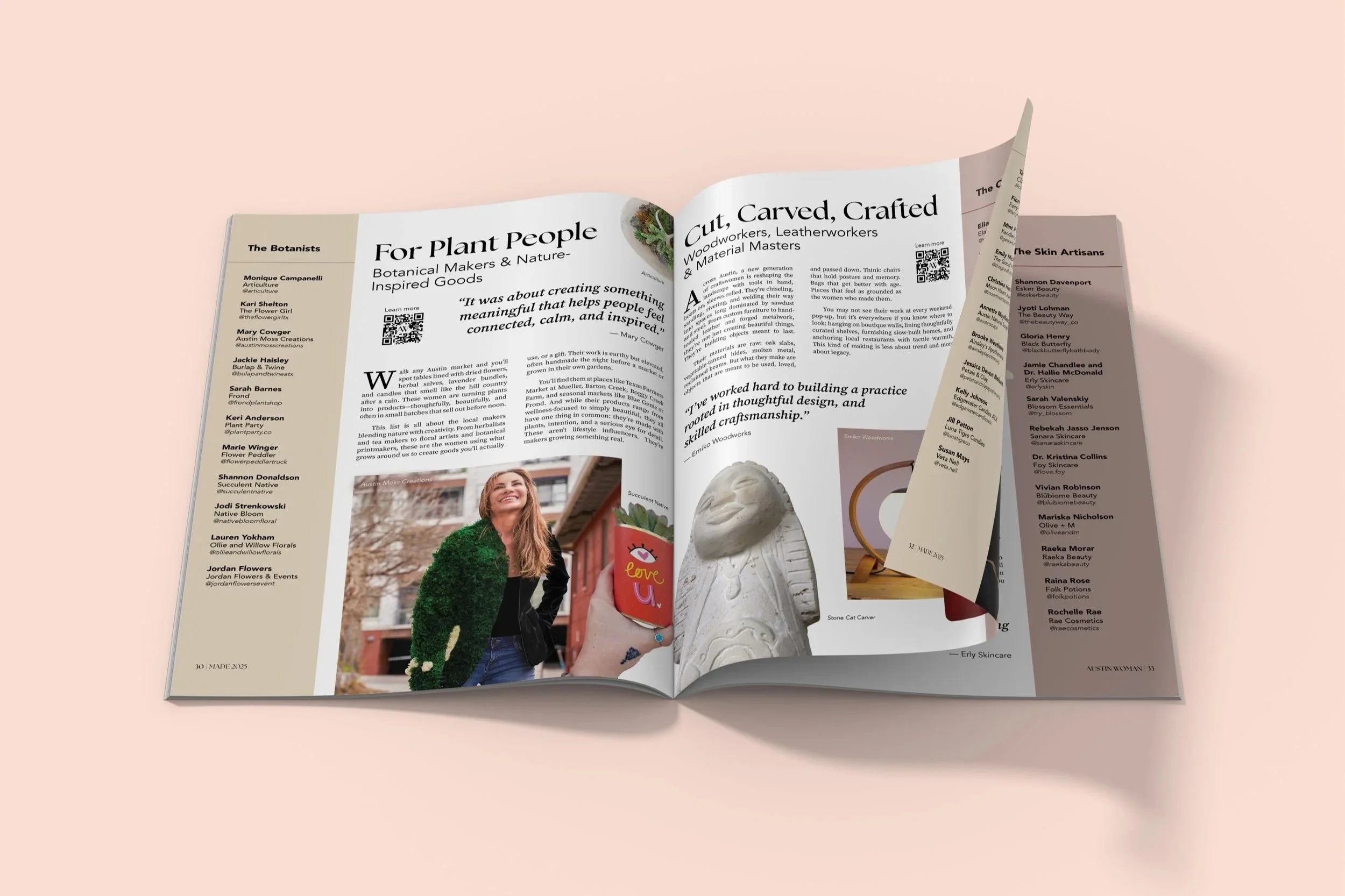
Project Details
Summer and Fall 2025 Magazine Layouts
Deliverables:
Grid system
Article and listicle layouts for digital issue
Sponsored content layouts for print issue
Summary
For this freelance project, I designed editorial layouts for both the print and digital editions of Austin Woman Magazine, working within an updated visual direction that included new typefaces and refreshed brand colors.
In addition to feature articles, the project included six multi-page listicle spreads highlighting local makers and nine “Roll Call” profiles showcasing women in the community. Working across a range of page types required developing a flexible, cohesive layout system that maintained consistency while allowing each story to feel distinct and engaging.
The final designs helped bring a more polished, editorial feel to the magazine while also strengthening my skills in InDesign and preparing files for both print and digital production.
Challenge & Discovery
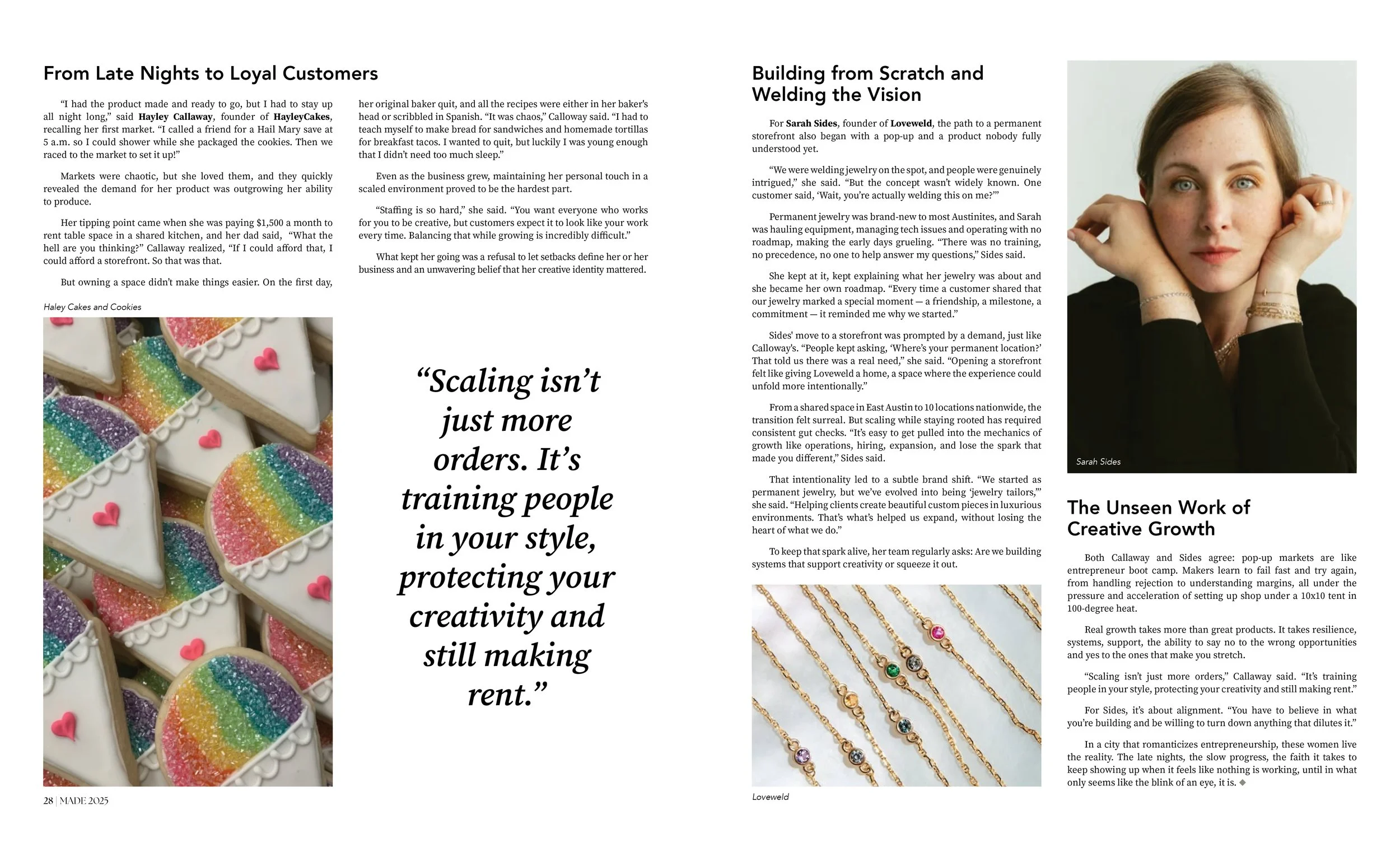
One of the biggest challenges in this project was building the grid system from the ground up. Decisions around margins, columns, spacing, and leading had to work across a wide range of editorial content while still feeling elevated and easy to read.
The listicle and “Roll Call” layouts brought a different kind of challenge: creating pages that felt distinct and visually engaging while maintaining enough consistency for them to feel connected as recurring features. Because these spreads appeared throughout the magazine, it was important that readers could immediately recognize them as part of the same series.
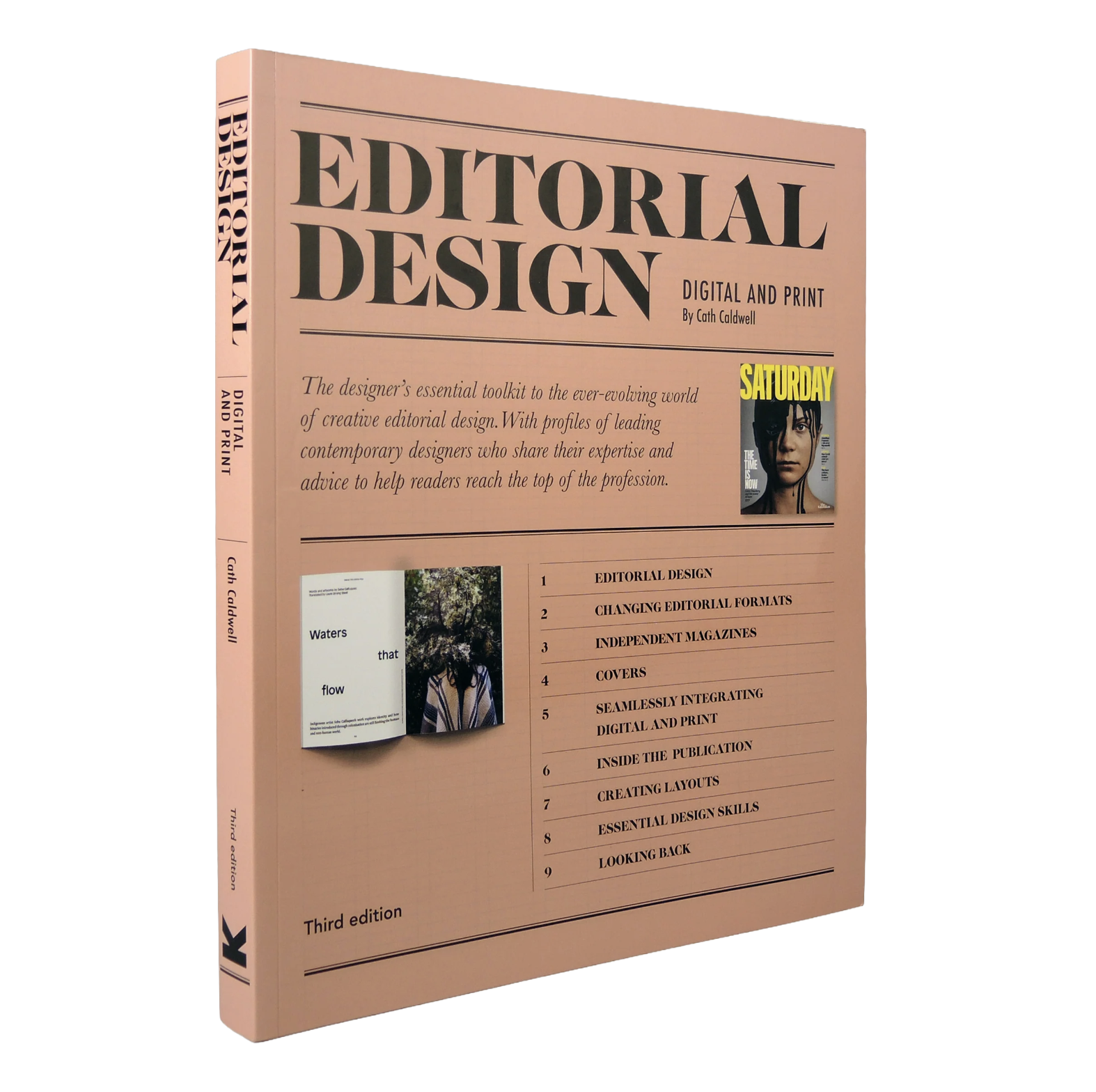
Discovery included researching both contemporary editorial design and previous Austin Woman issues to understand what visual opportunities existed for refinement. I also referenced Editorial Design (3rd edition) by Cath Caldwell for design history context and inspiration.
Process
FEATURED ARTICLES
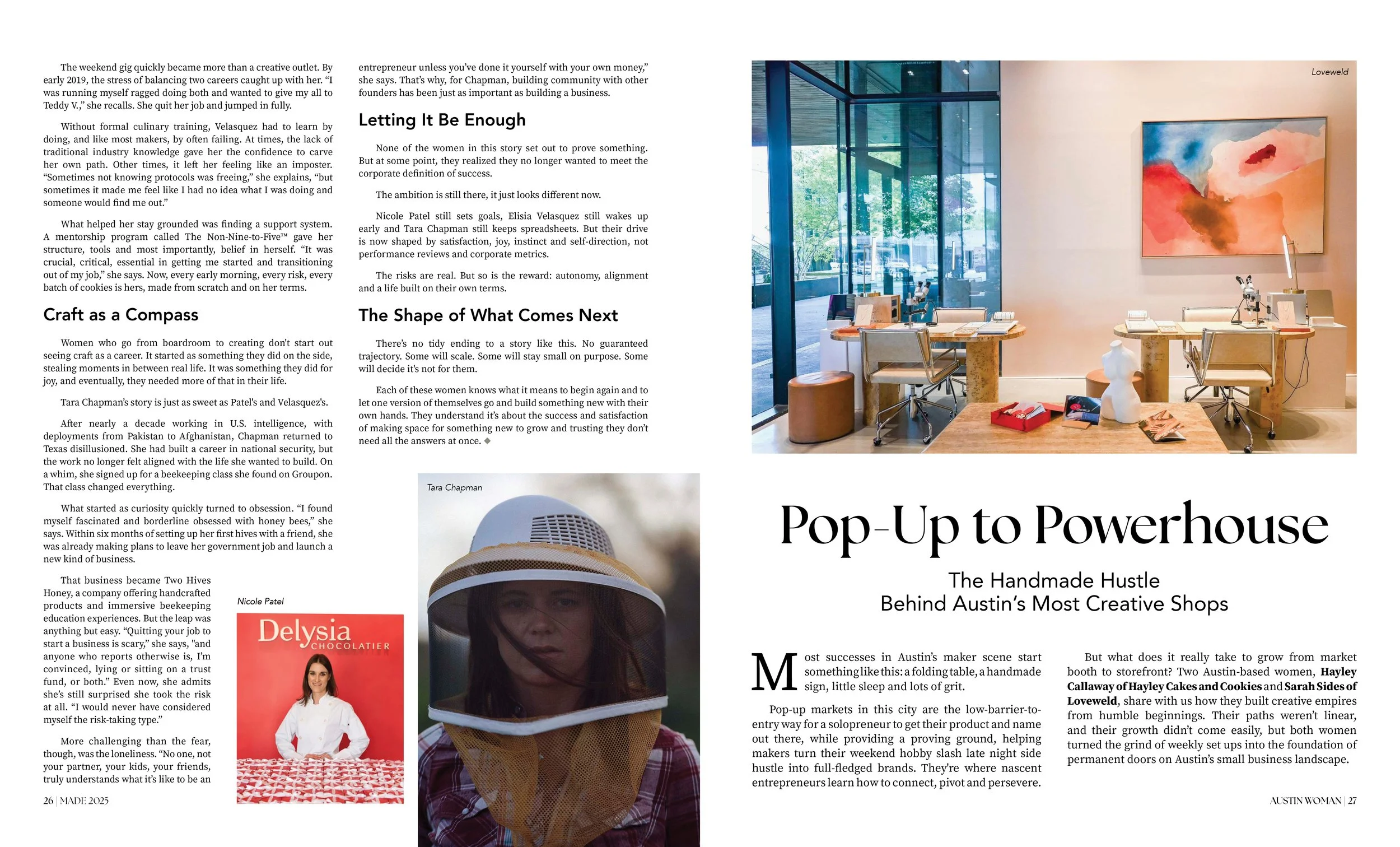
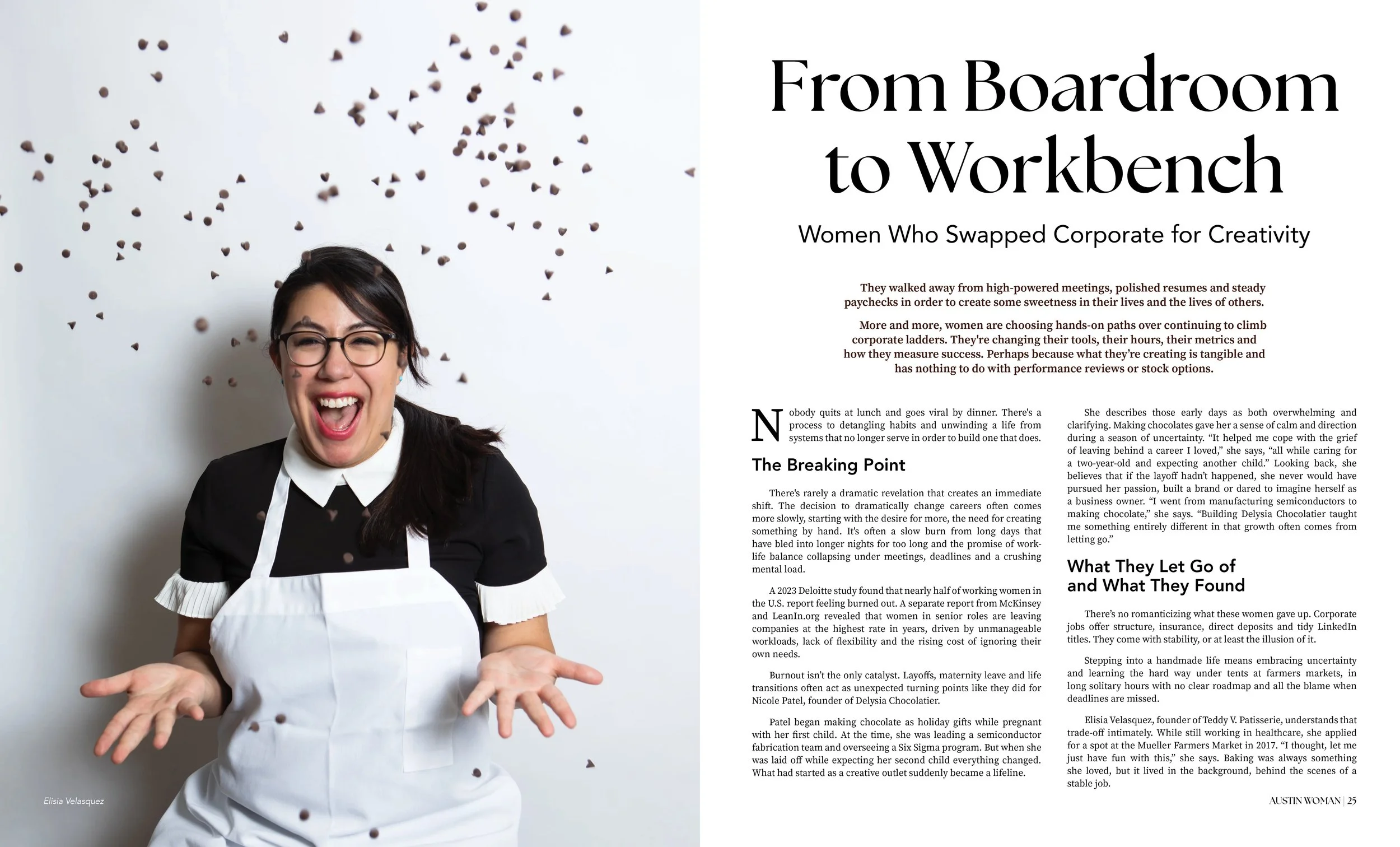
By introducing larger margins, increased leading, and more space between paragraphs, the newer article layouts feel more open and approachable, breaking dense blocks of text into a rhythm that naturally guides the reader down the page. A larger subhead, bold intro, and oversized pull quotes create clear entry points that draw readers in and make the story feel immediately engaging. The added negative space and wider gutter give the layouts a more elevated editorial feel, while justified body copy brings a sense of refinement and structure.

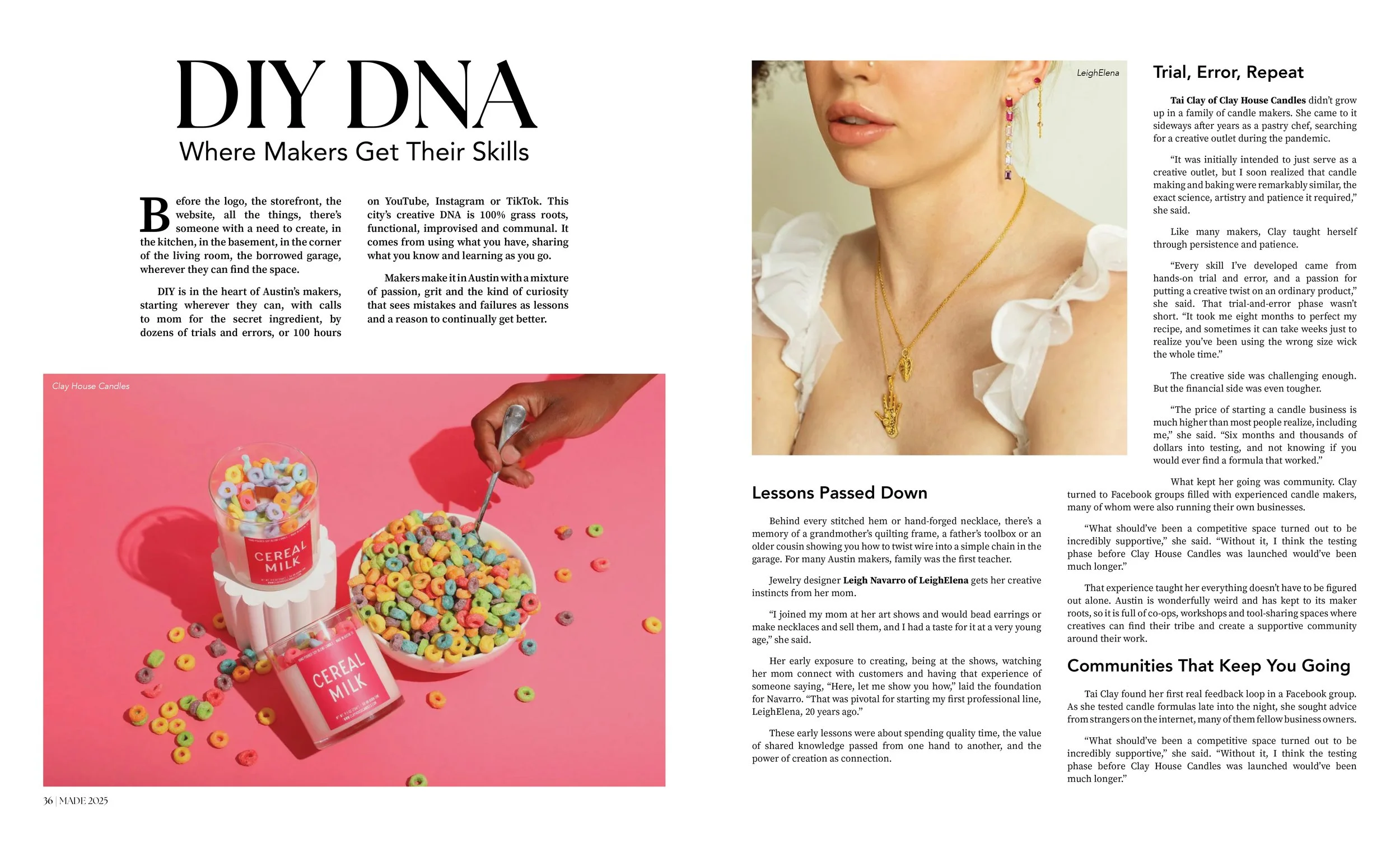
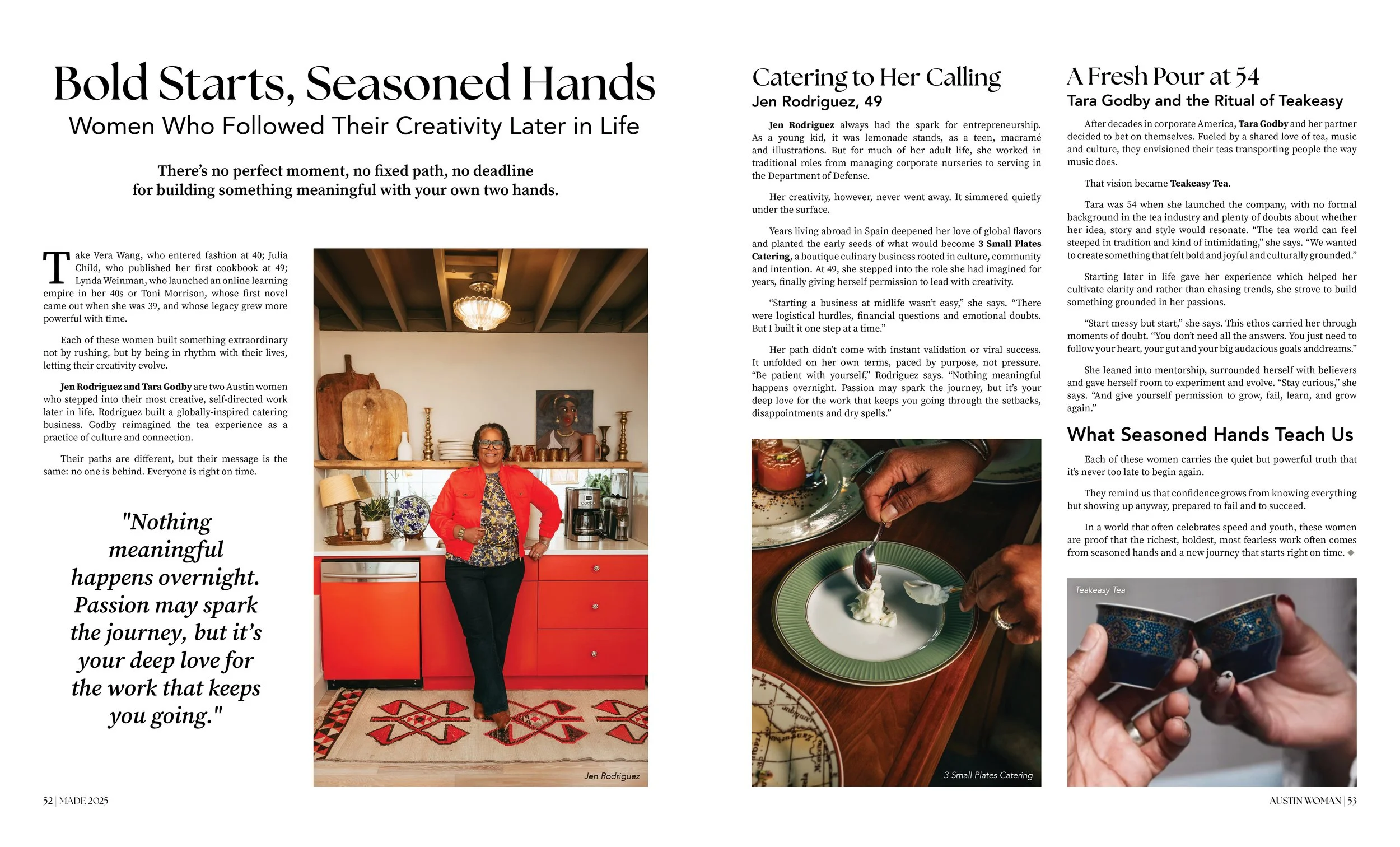
LISTICLES
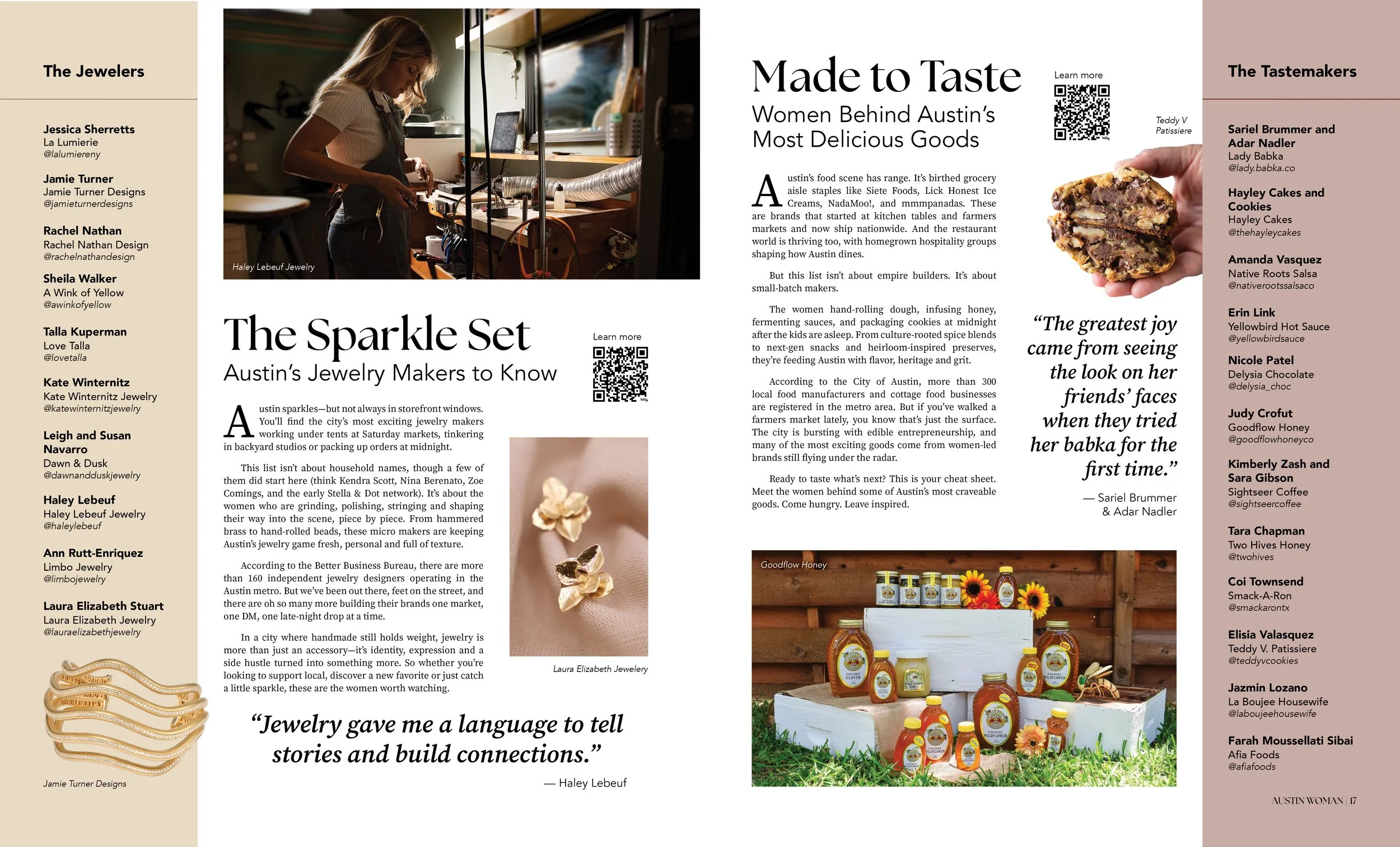
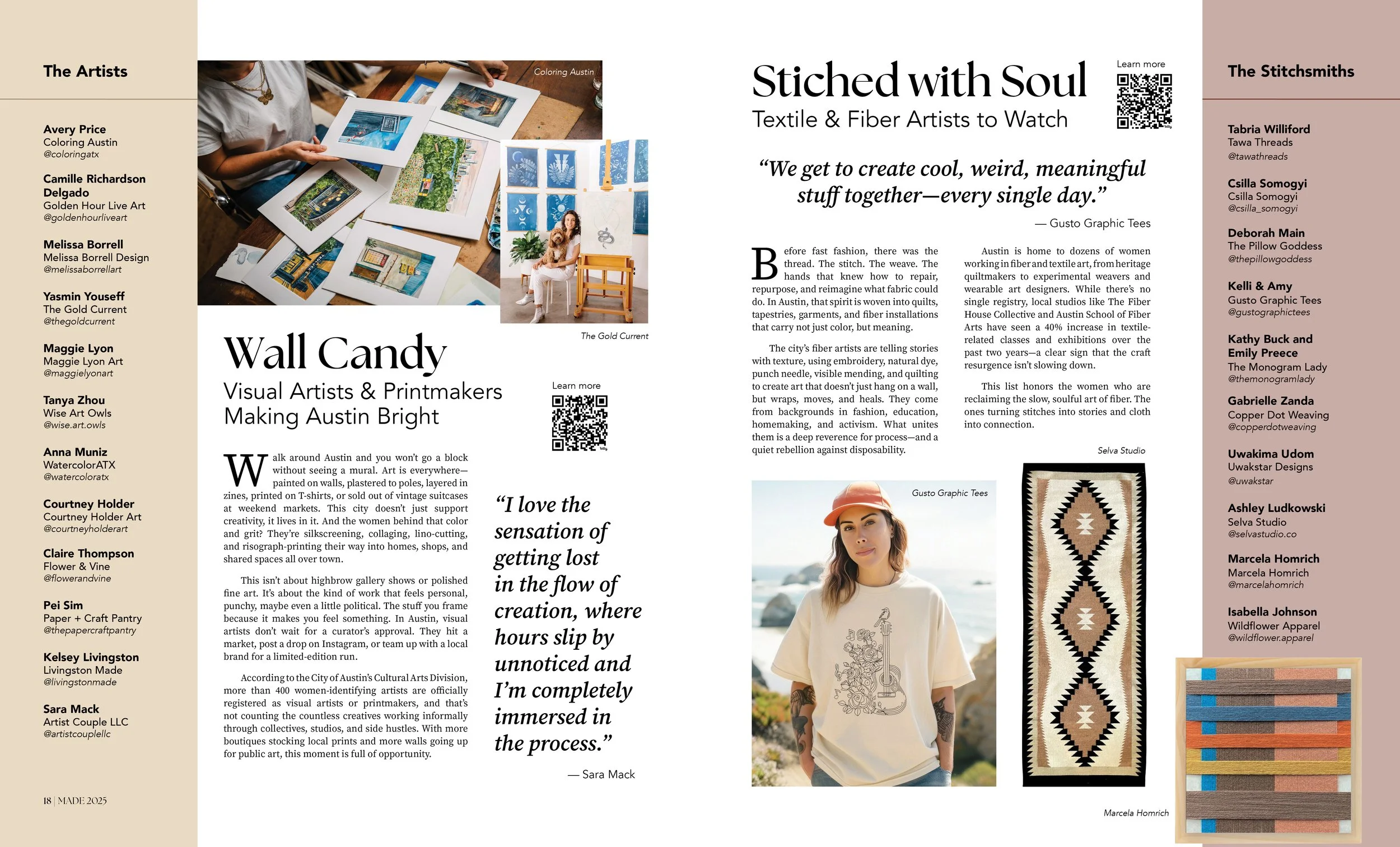
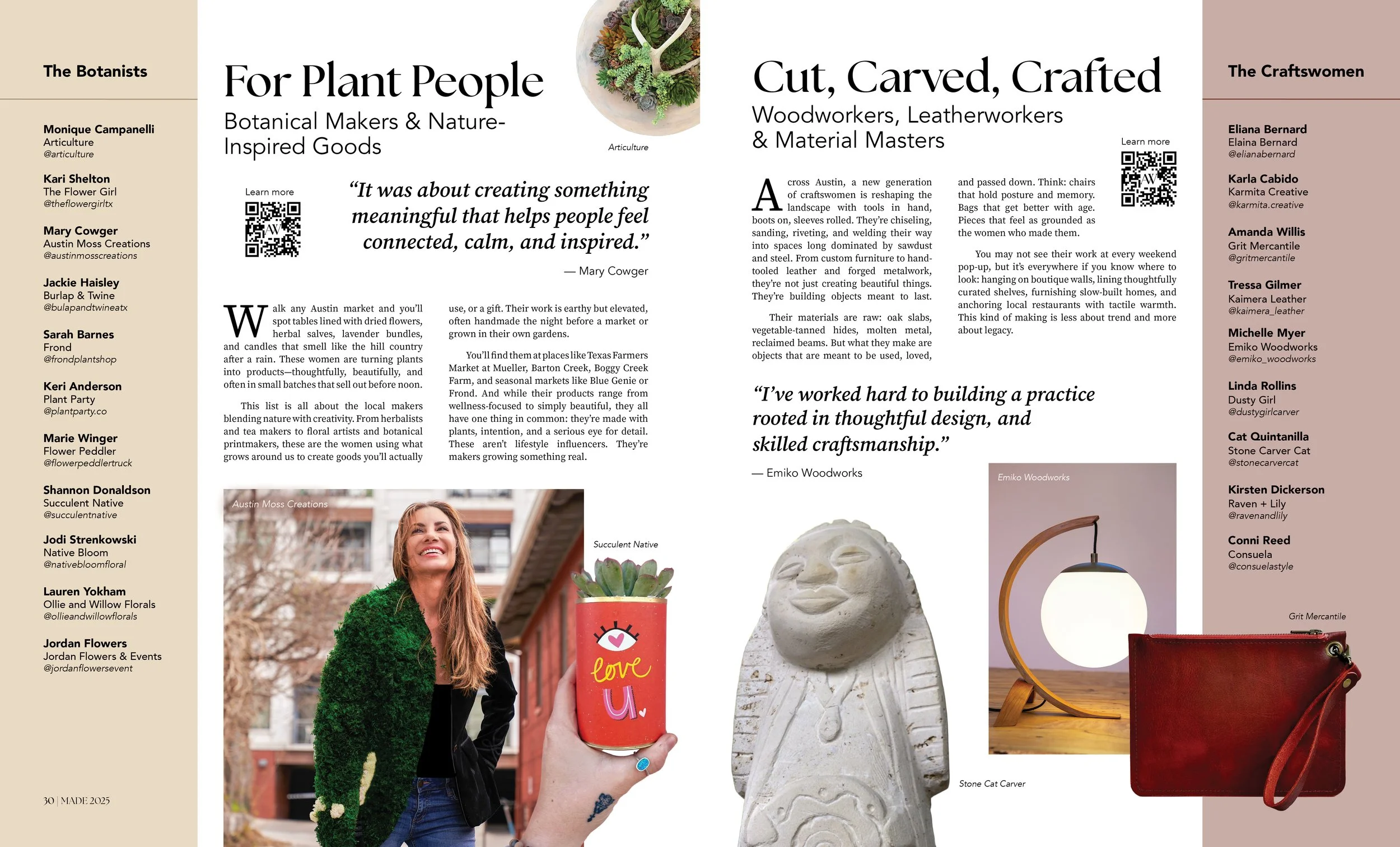
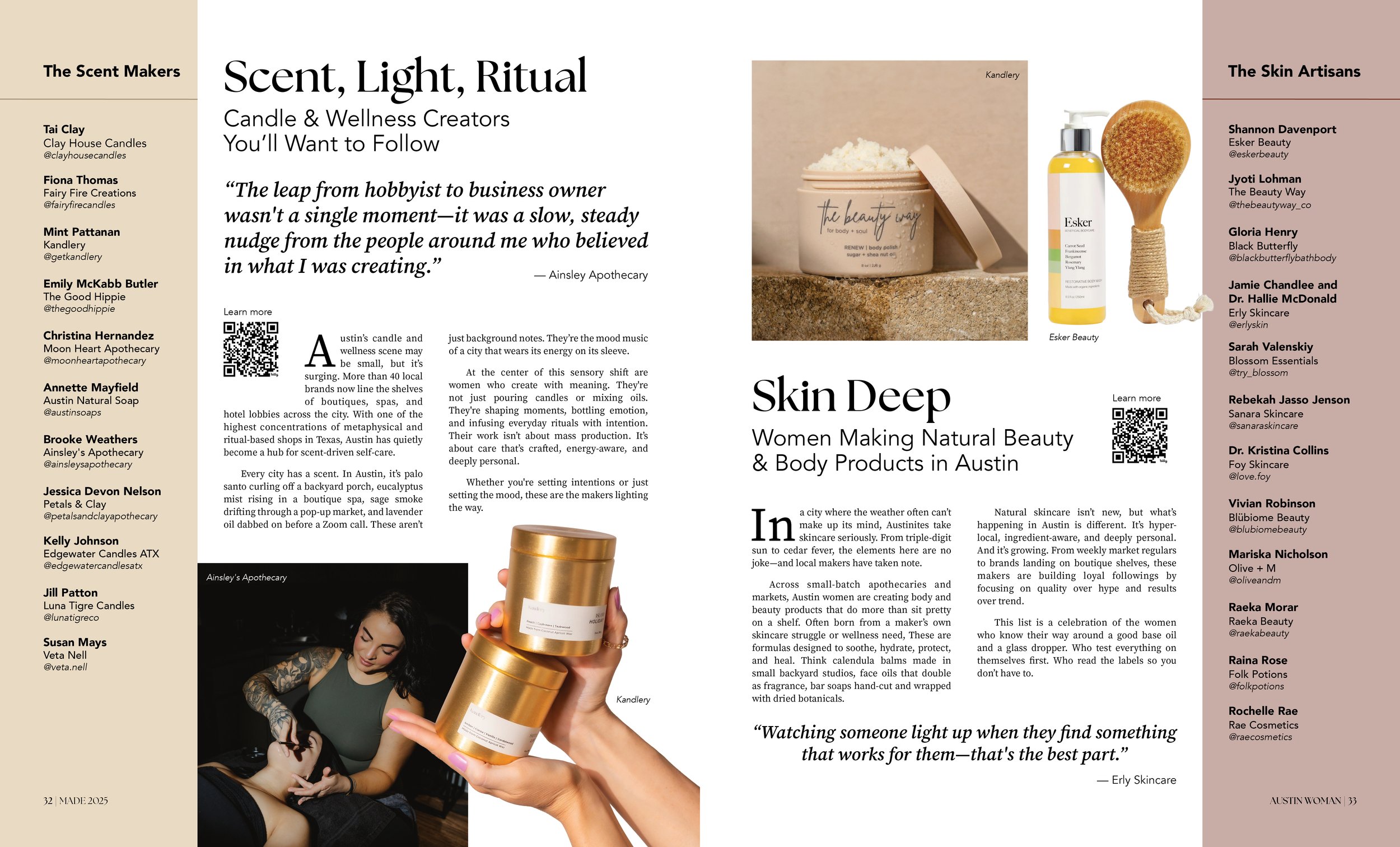
For the listicles, I was provided with the names, body copy, and a selection of photographs, and I sourced additional images from makers’ websites. I selected the final imagery and established a consistent layout system across pages. This included maintaining the same background colors for side lists, using 2–3 images per page, keeping heading and subhead sizes consistent, and incorporating a QR code on each page along with a quote on most pages.

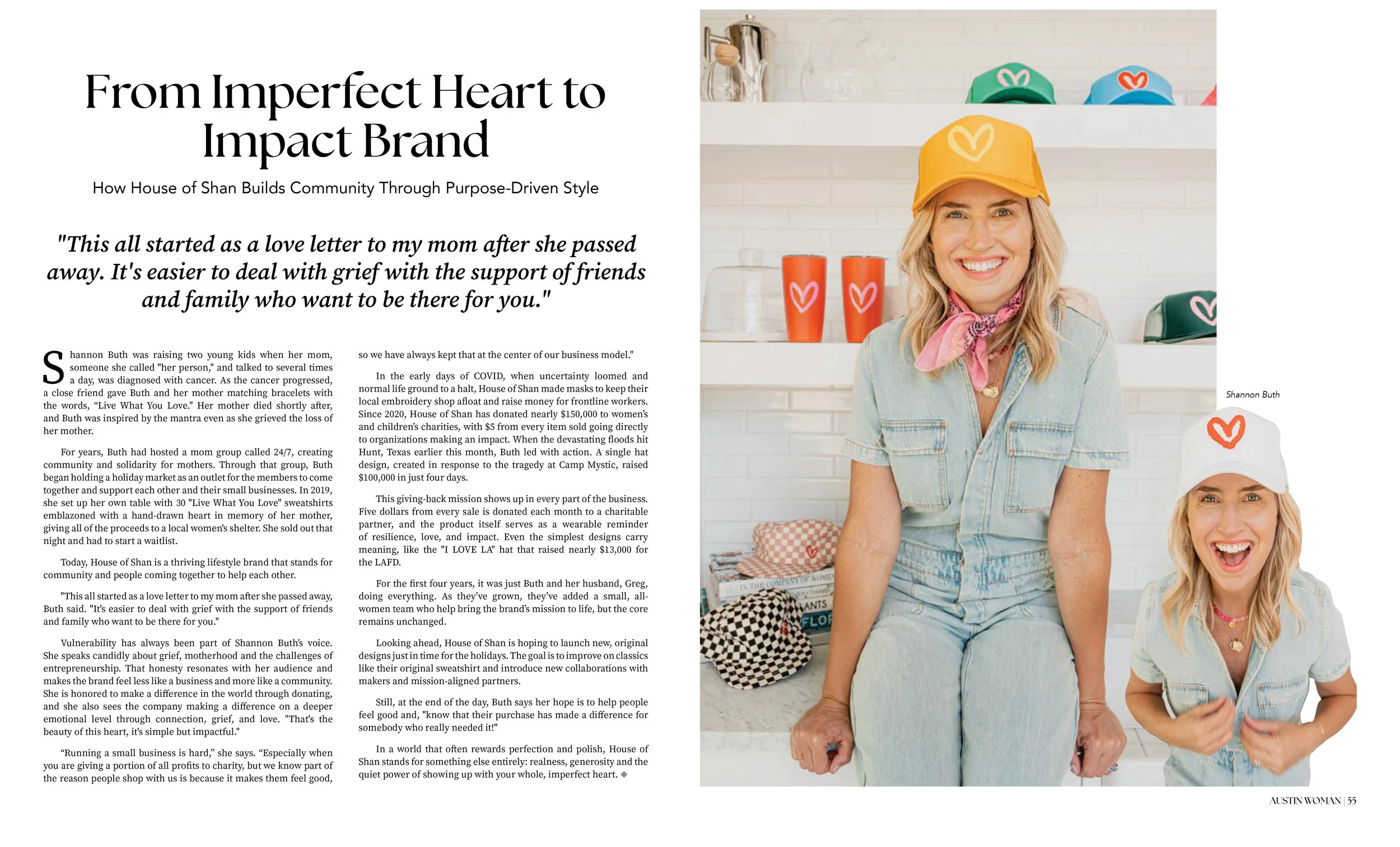
SPONSORED CONTENT “ROLL CALL”
The updated Roll Call layouts were redesigned to feel more like editorial content as they became integrated throughout the magazine rather than grouped together. By introducing clear headlines and subheads, the pages mirror traditional article structures and invite readers in. A prominent pull quote adds a moment of emphasis and visual interest, while consistent side and bottom bars create a cohesive system across all features.

Solution
The final layouts came out of an iterative process of refining hierarchy, imagery, and spacing. The result is a consistent visual system across the magazine, while still giving each feature its own sense of personality.
ARTICLE LAYOUTS



LISTICLE LAYOUTS


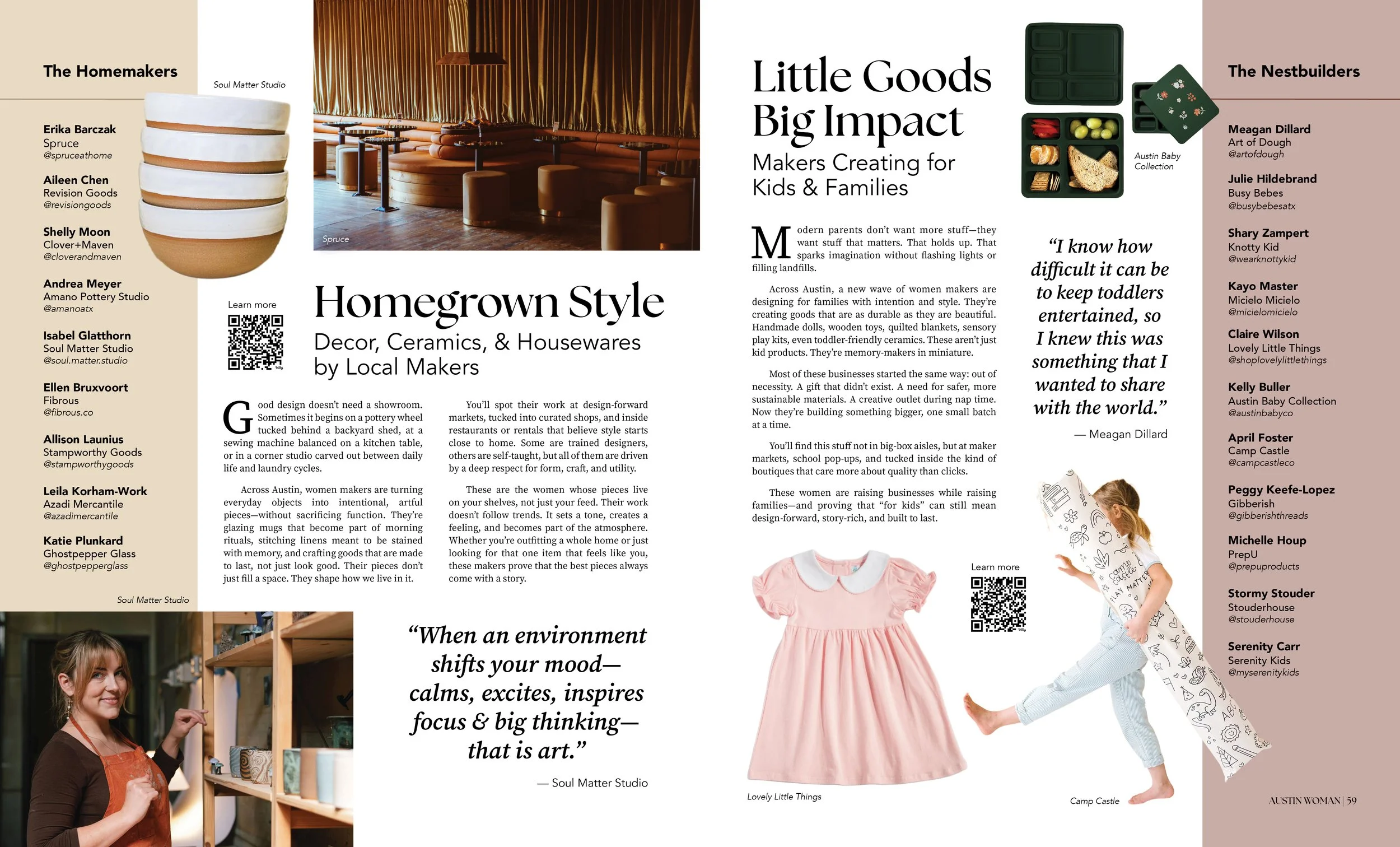
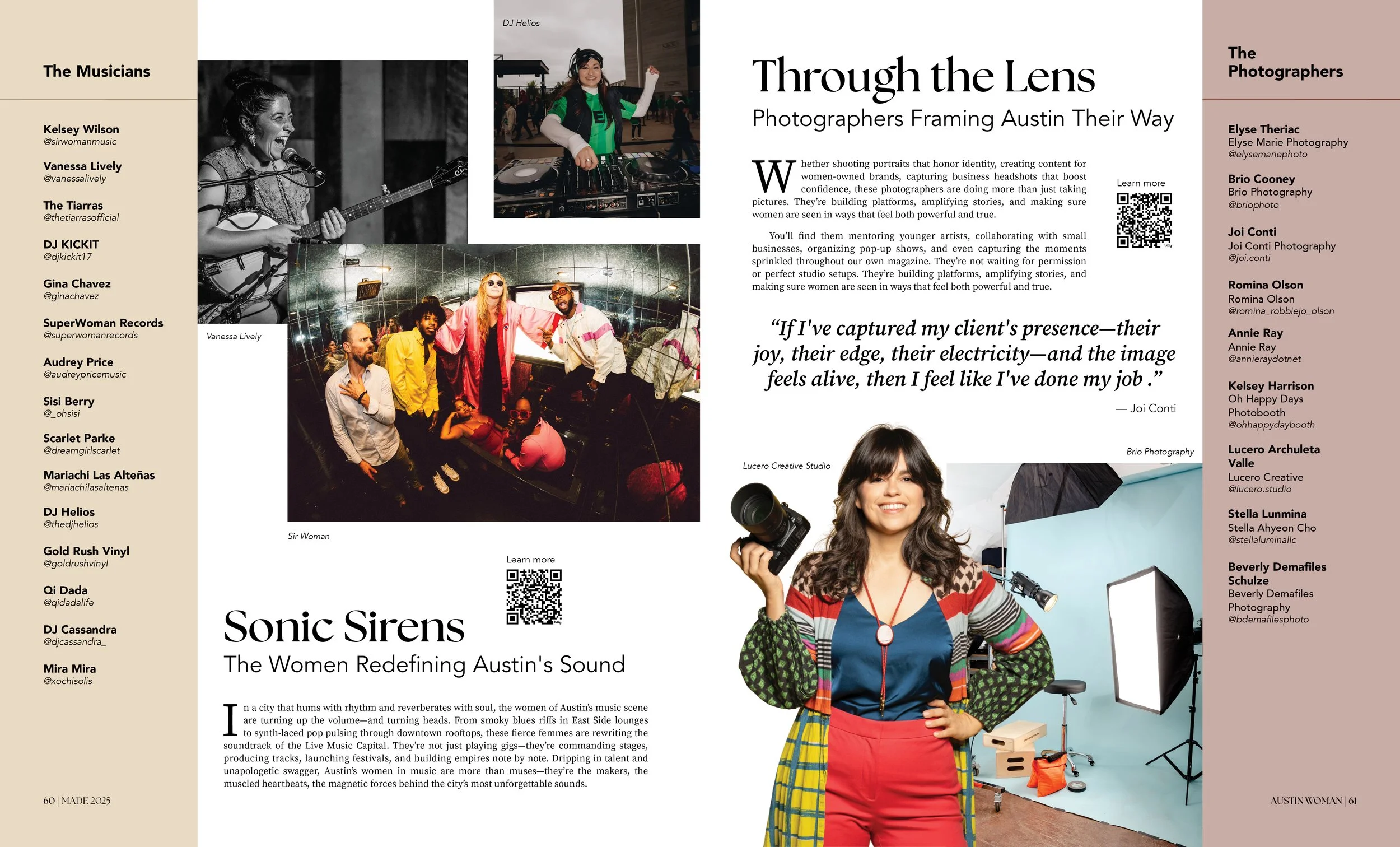
ROLL CALL LAYOUTS


Reflection
What feels most meaningful about this project is that the design decisions I made are still being used. The grid system, spacing choices, and overall layout structure became part of the magazine’s ongoing visual framework, so the impact of the work extended beyond a single issue. It was rewarding to contribute something lasting and to know the choices I made on the ground continue to shape how the publication is designed. Throughout the process, I also strengthened my skills in InDesign and gained valuable experience preparing files for both print and digital production.
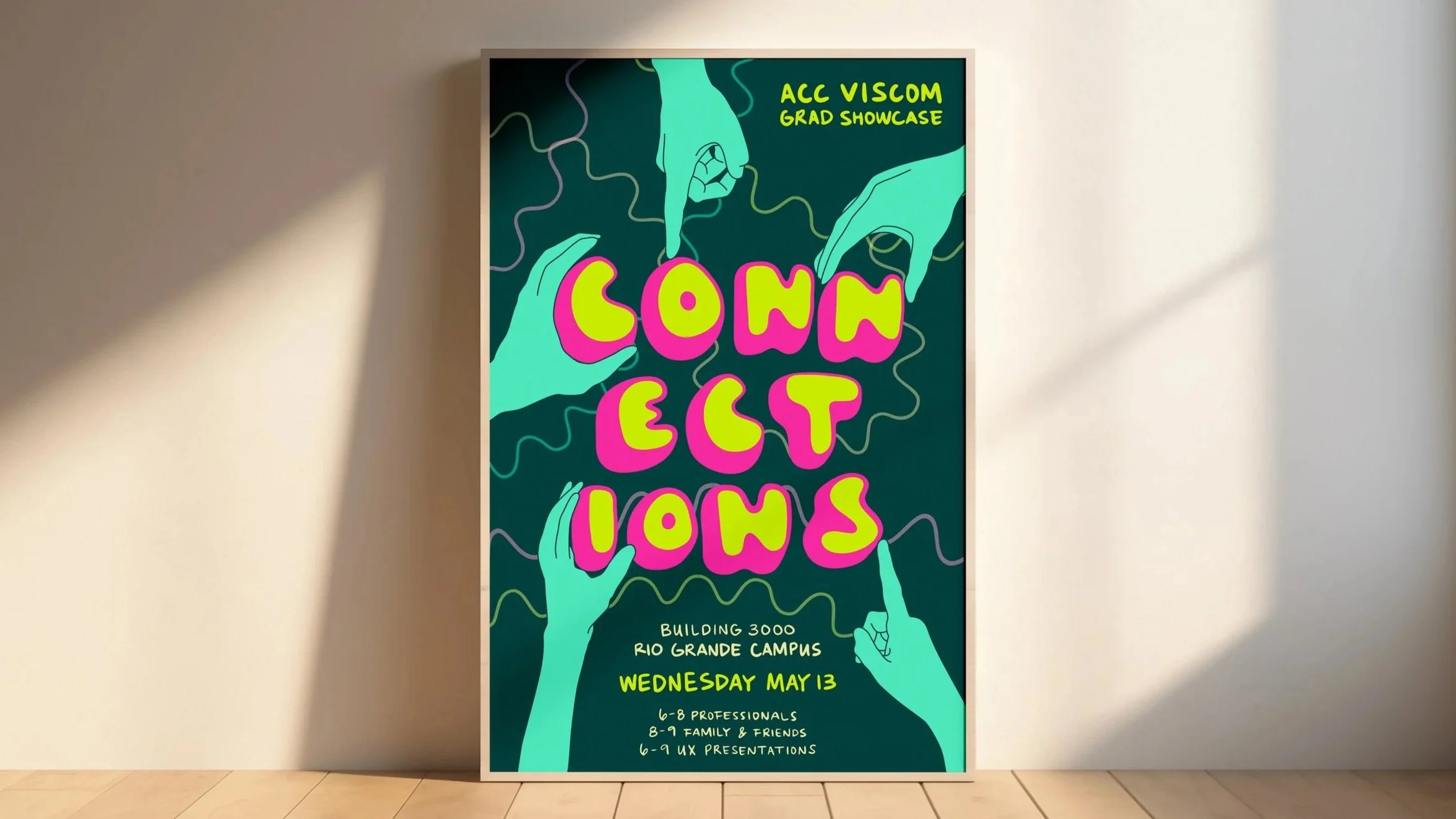
ACC VISCOM portfolio show

END OF AN EAR